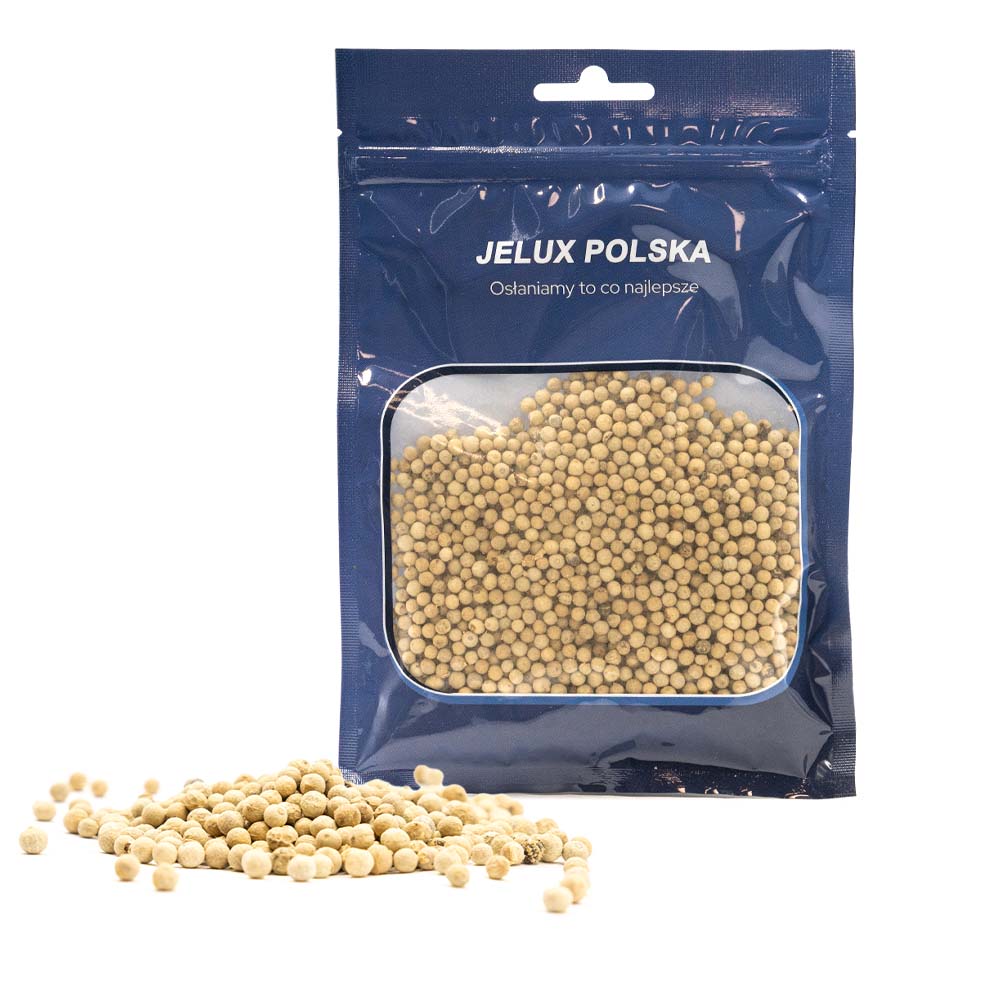
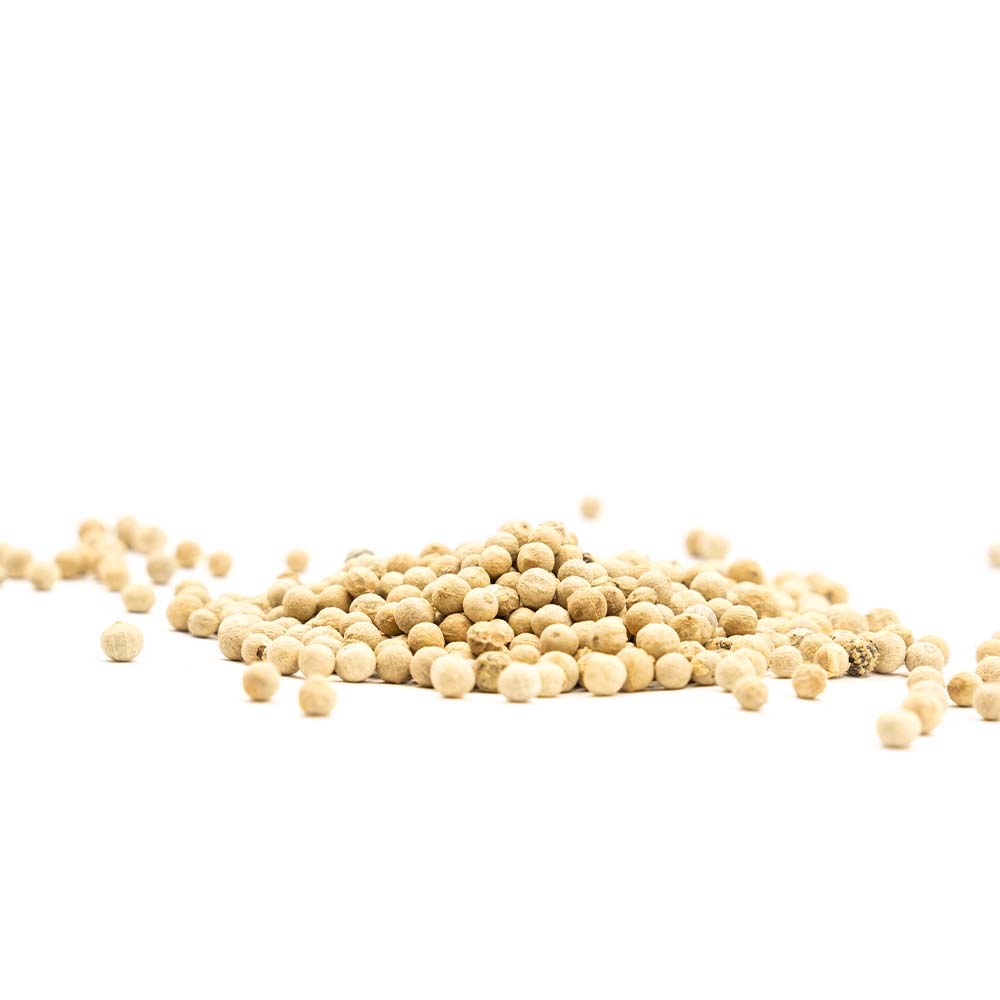
White pepper grain seems to be the opposite of black pepper, yet both spices come from exactly the same plant, belonging to the pepper family – Piper nigrum. The difference between these spices lies solely in the way the grains are processed, but it has a significant impact on their final taste and properties.. Unfortunately, in terms of popularity, white pepper is definitely inferior to its dark cousin… White pepper has been known to humanity for no less time than black pepper. The Hindu population used it for cooking as early as 2000 BCE!In traditional Chinese medicine, white pepper was a remedy recommended for getting rid of phlegm accumulated in the respiratory tract and generally excess dampness in the body.. It was believed that its consumption limits the feeling of fatigue and sluggishness, warms up, and also reduces pain and stiffness. The list of benefits of white pepper is very long.. First of all, it contains substances important for health. Among them are, among others. essential oils that show soothing and anti-inflammatory effects, as well as vitamins B1, B2, B6, C, K, minerals such as magnesium, iron, calcium, potassium, phosphorus, selenium, manganese, sodium, and fiber, proteins, and fats. Thanks to their content, white peppercorns have a cleansing effect – they support the process of eliminating toxins and unnecessary metabolic products from the body. Accelerates metabolism, improves digestion, eliminates gastrointestinal ailments such as indigestion or diarrhea. White pepper is also a strong antioxidant, which means it inhibits the action of free radicals, thereby delaying the aging process and simultaneously improving the condition and appearance of the skin.. It also supports the body's immunity. Application:In Asian cuisine, white peppercorns are a spice appreciated much more than in our corner of the world.. On the markets, they sell the freshest grains, which sell like hotcakes.. The Chinese and Thais commonly use them in ground form for almost every dish, including scrambled eggs. Vietnamese people most often add white grains to soups and pork dishes.. In many Asian restaurants, you won't find a pepper shaker with black powder on the table, but rather with a light one.



 No-delivery refund