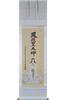
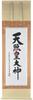
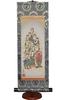
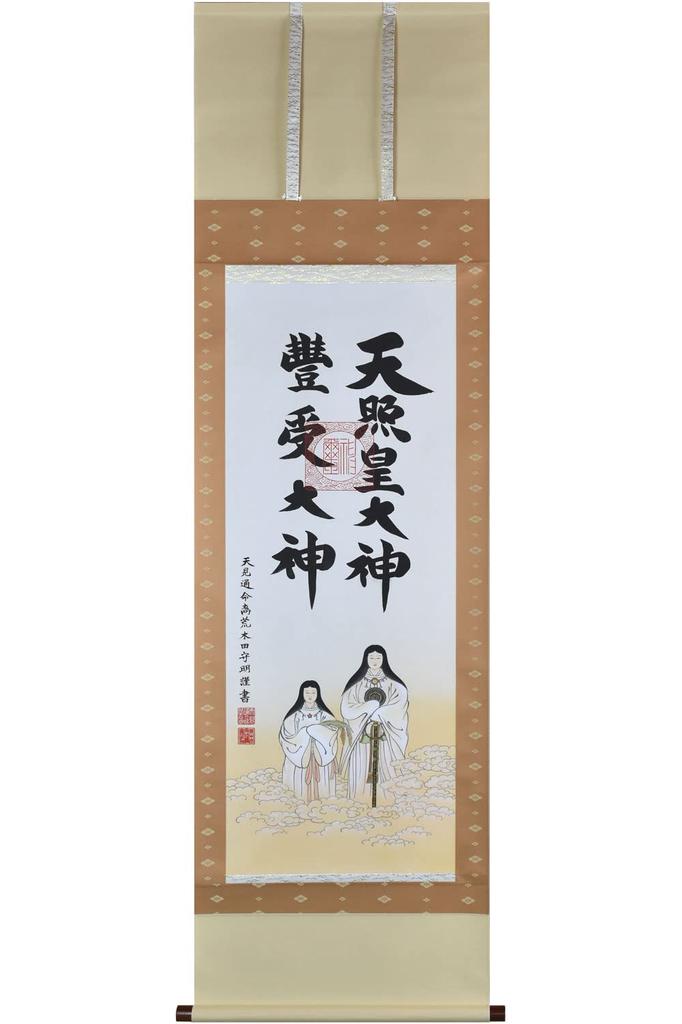
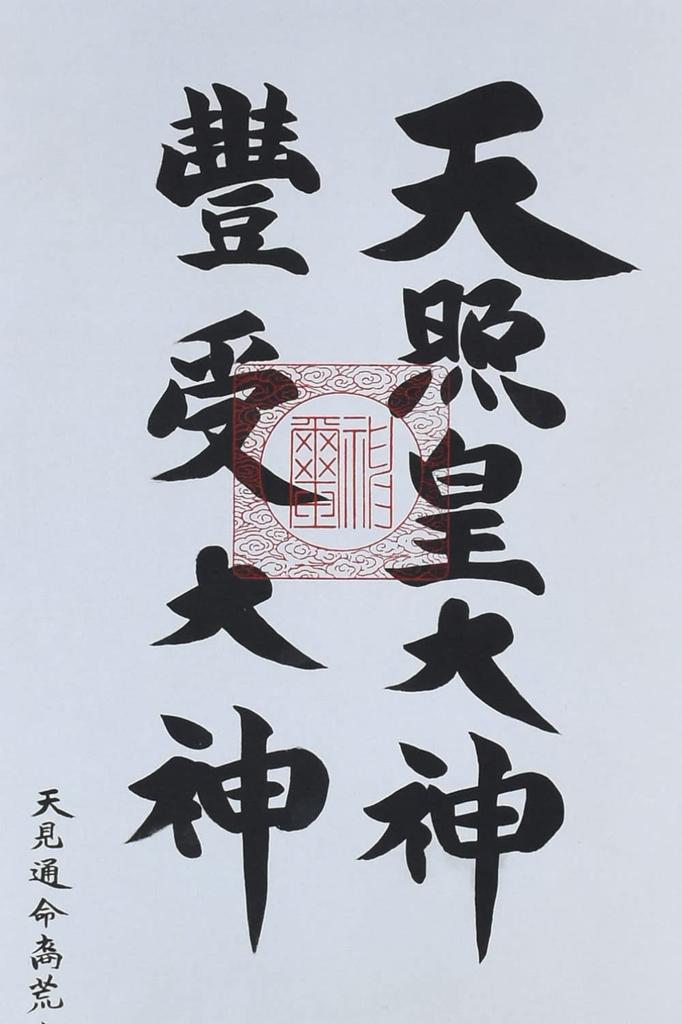
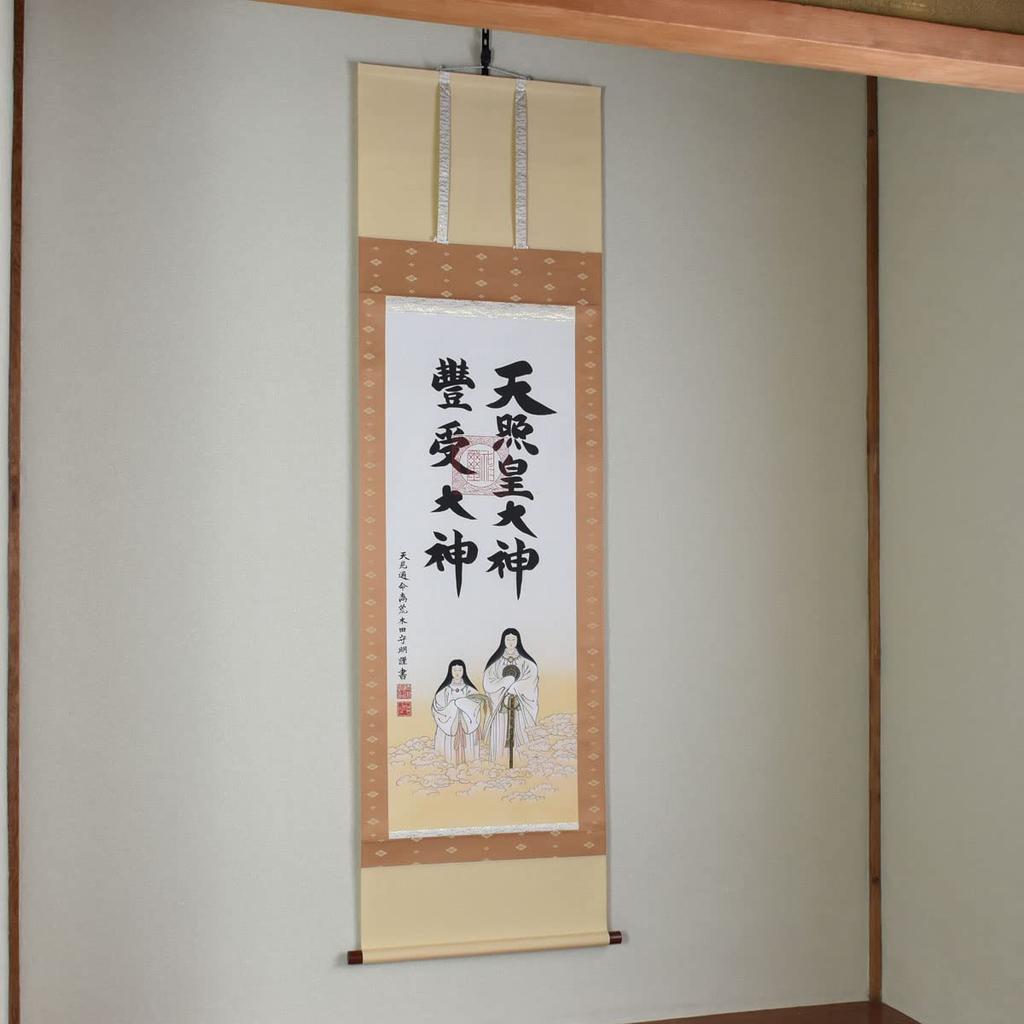
These hanging scrolls are handwritten by Moriaki Arakida one by one and carefully mounted in the lap of Ise Grand Shrine.
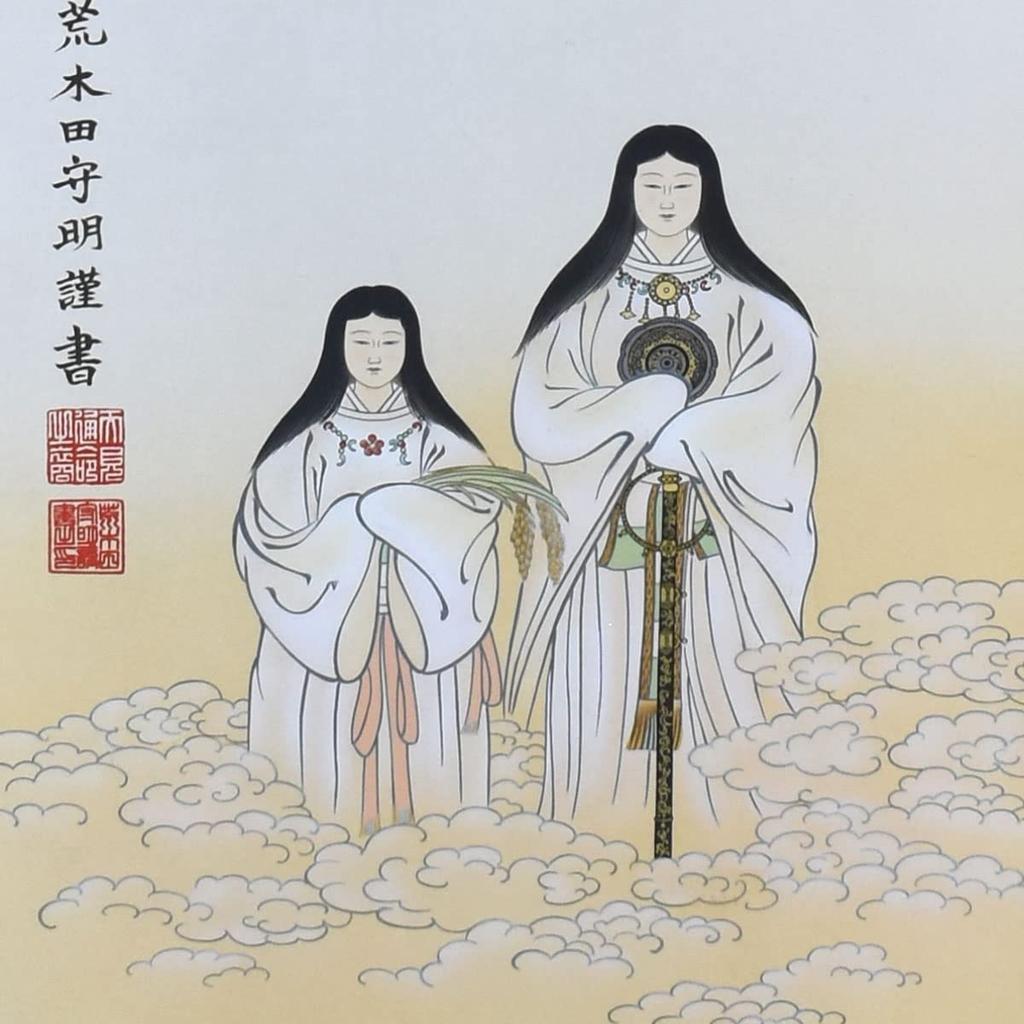
This is the best model hanging scroll that depicts the images of Amaterasu and Toyouke.
Size: Shakugo approx. 53 x 181cm (Shakuhachi in Ise size notation)
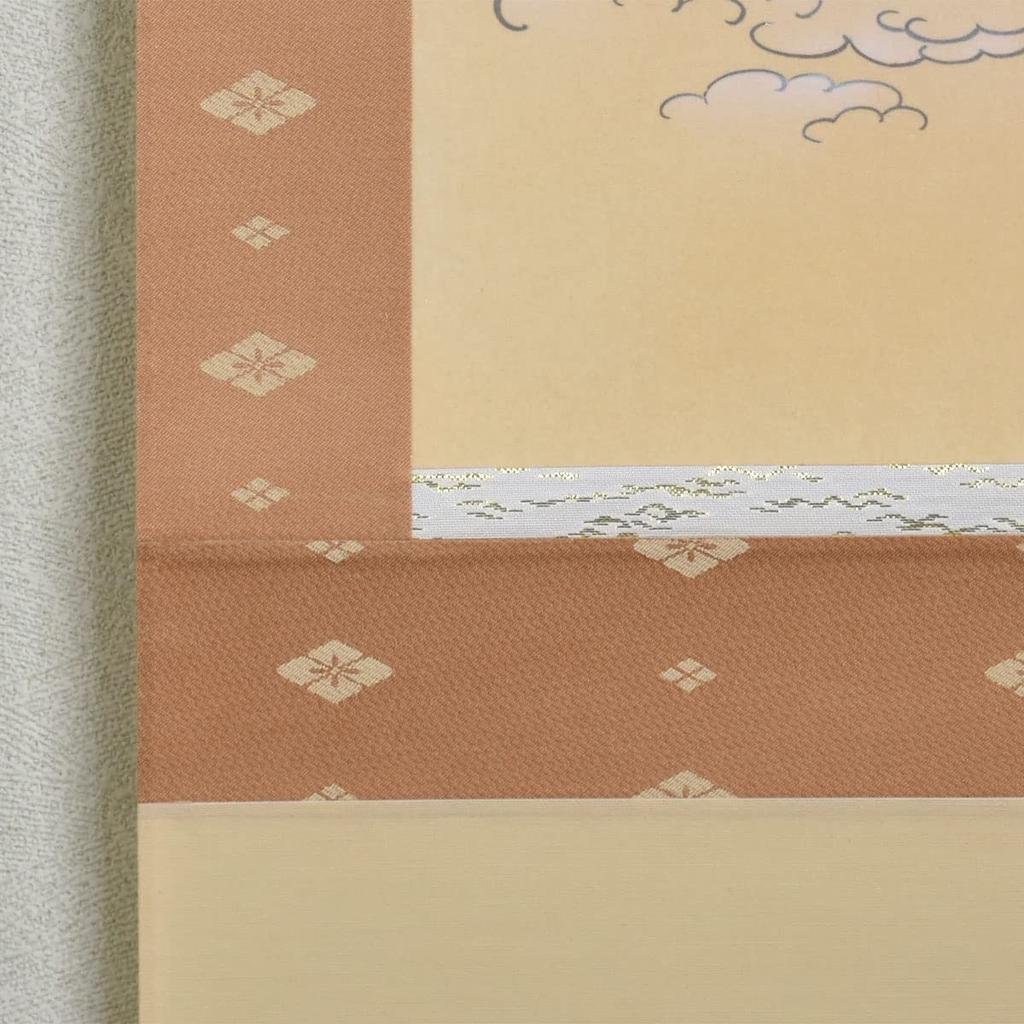
Main paper: Silk book / Cover: Brown silk book
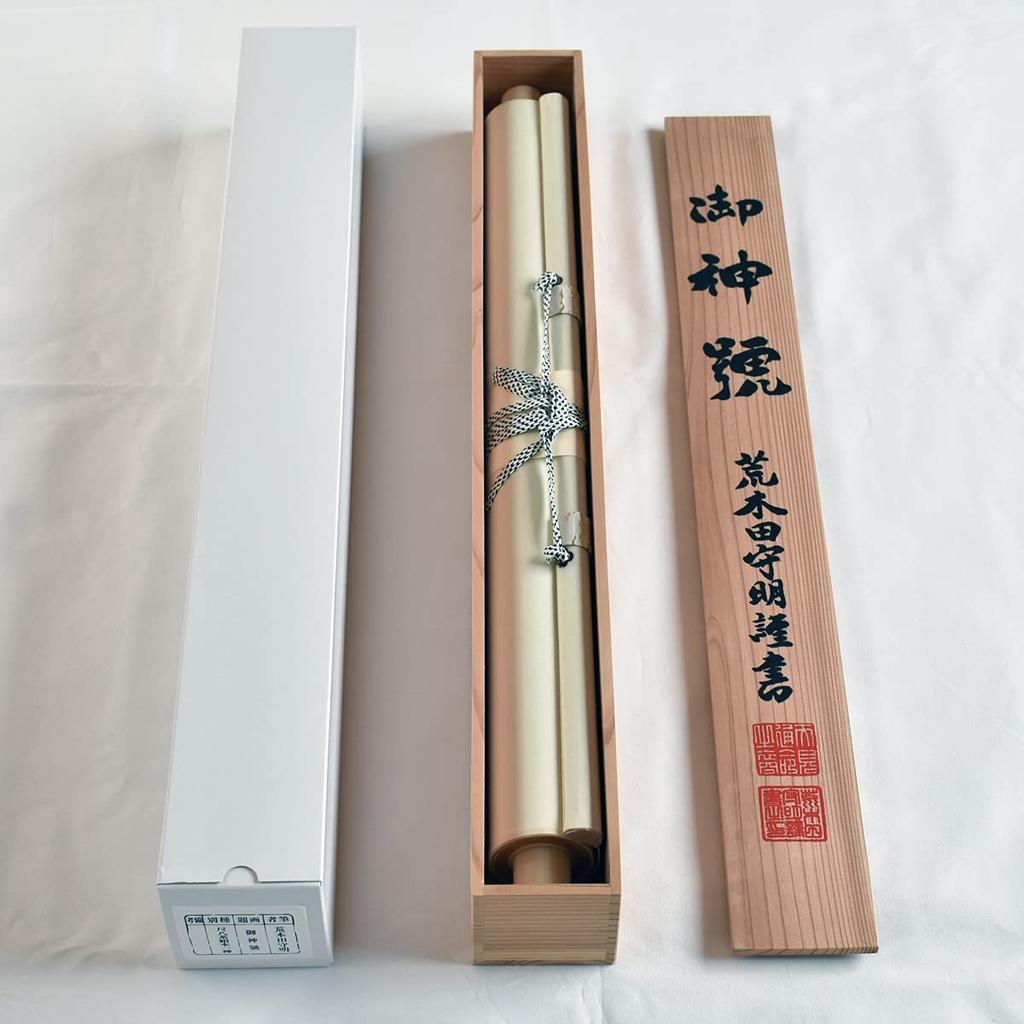
Storage box: wooden box
The sacred shrine of Amaterasu Omikami has been hung in alcoves since ancient times, not only during celebrations, auspicious occasions, and New Year's, but also on a daily basis. This is an expression of gratitude for the divine virtue of Amaterasu Kotai-kami, the goddess of the imperial ancestors, who ``casts her light upon all things.'' The tokonoma is a place for cleaning and a place for the mind at home. By hanging the shrine of Amaterasu Omikami there, a cheerful family with smiles will be built. The shrine's teachings, ``Keep everything alive, review it, listen to it again, read it again, and forgive with a sincere heart'' are always felt close to us, and are filled with prayers and wishes for the safety of one's family, the prosperity of one's livelihood, the development of one's hometown, and ultimately the prosperity and peace of the nation. Toyouke Omikami is the goddess of food, responsible for procuring food for Amaterasu Omikami. He is the guardian deity of food and industry, providing us with rice, food, clothing, shelter, and energy. It is enshrined at Toyouke Daijingu Shrine (Outer Shrine). Approximately 1,500 years ago, Amaterasu Omikami was welcomed from the country of Tamba as the deity responsible for the meals of Amaterasu Omikami. Moriaki Arakida
Moriaki Arakida is a descendant of ``Amanomi Tori no Mikoto'', who also appears in ``Nihon Shoki'', and is a former priest of the venerable Ise Grand Shrine. He holds a selected position that allows him to write the sacred shrines, and there is no shortage of people from all over the country who wish to be awarded the sacred shrines, which he writes with all his heart and soul. The Arakida clan was a clan that inherited the Negi of Ise Kodai Shrine (Ise Grand Shrine Inner Shrine) until the end of the Edo period.


 Επιστροφή χρημάτων λόγω μη παράδοσης