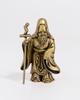
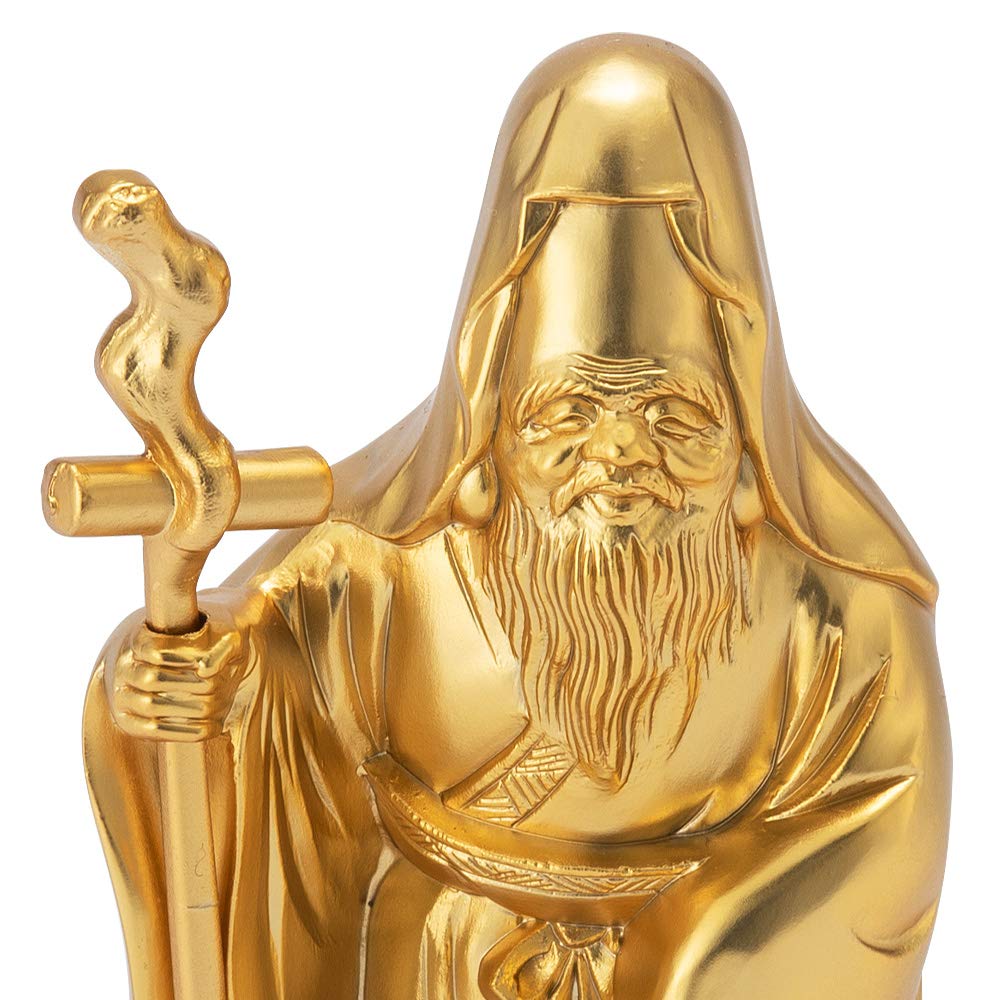
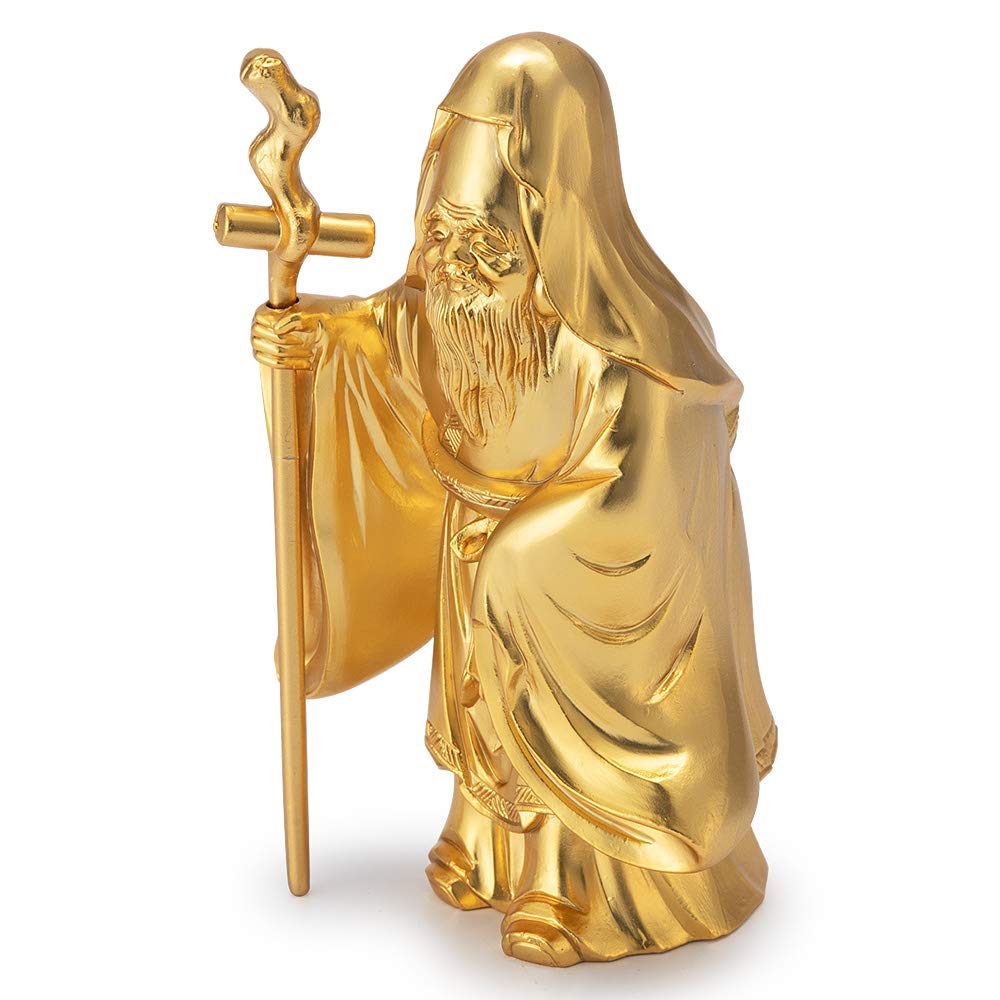
Dimensions: Height to overhead 8.5cm x Width 5.5cm x Depth 3.5cm / Material: Alloy gold-plated finish / Weight: Approx. 353g / Production area: Made in Takaoka, Toyama Prefecture / Notes: Made by Hideun Makita
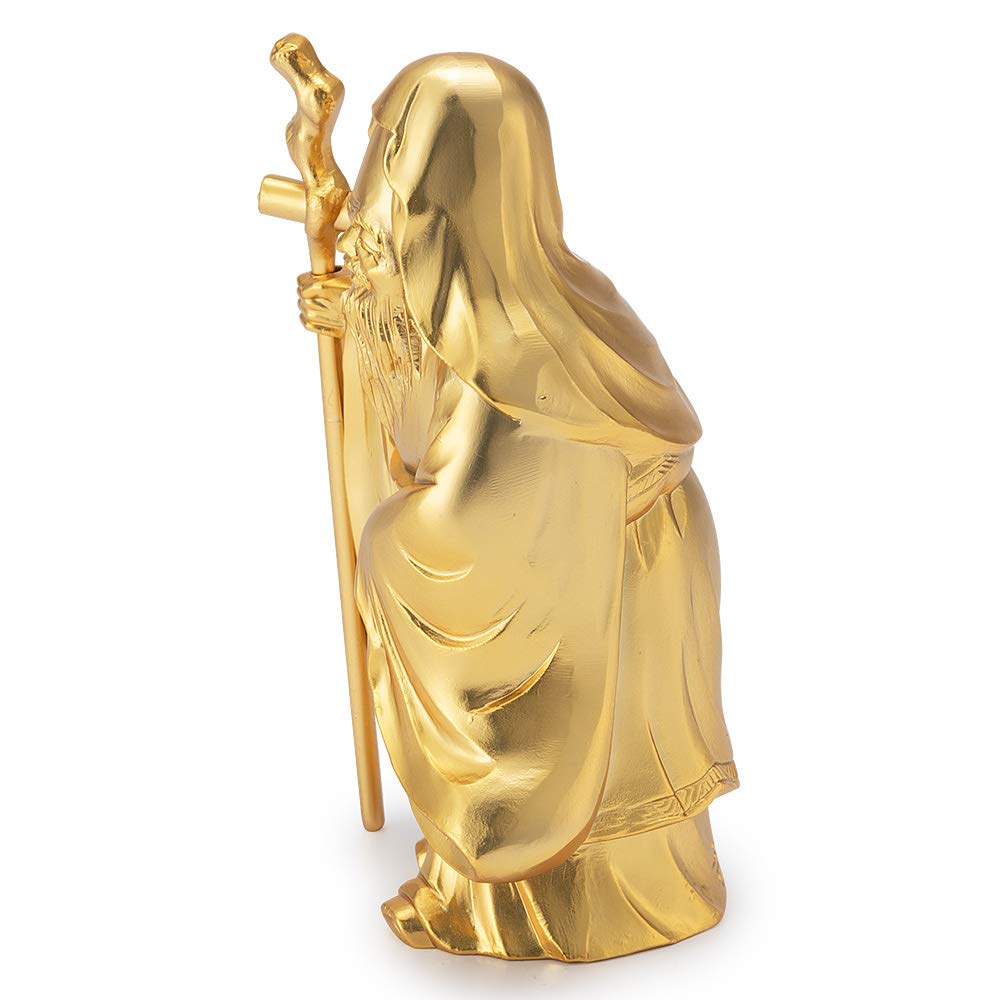
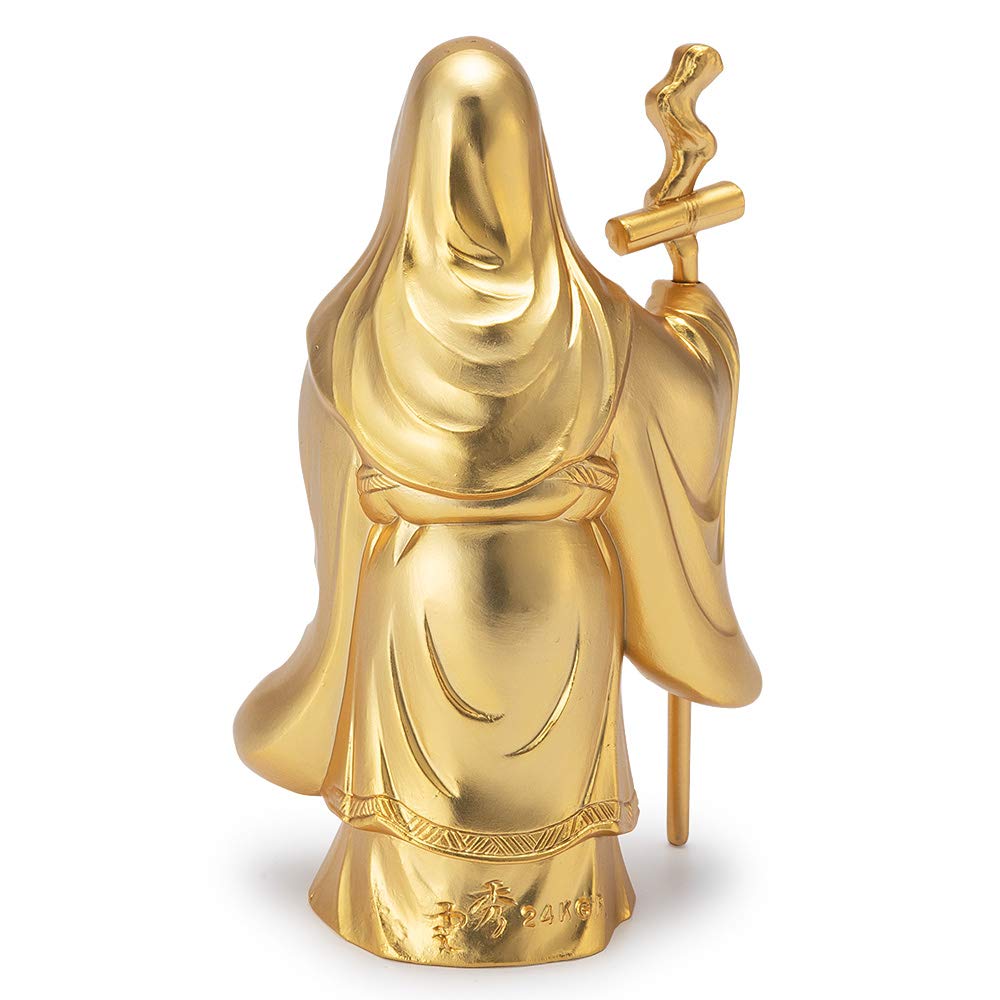
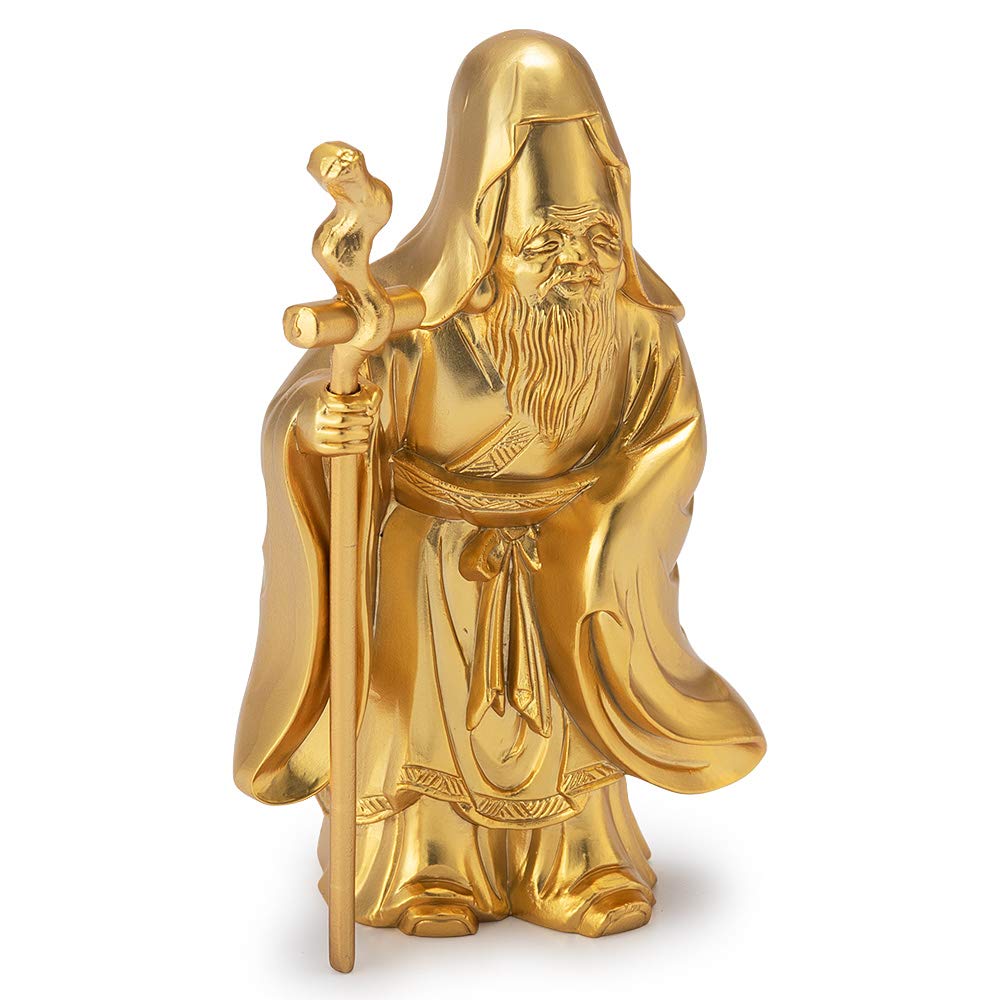
Fukurokuju is counted as one of the Seven Lucky Gods as a god of longevity and happiness, and is widely worshiped by folk.
Comes with a "Certificate" issued by Takita Shoten, which is proof of the Takita Shoten brand quality.
Comes with a "Certificate" issued by Takita Shoten, which is proof of the Takita Shoten brand quality.
Fukurokuju is counted as one of the Seven Lucky Gods as a god of longevity and happiness, and is widely worshiped by folk.
The history of the belief in the Seven Lucky Gods dates back to the Kamakura period, when the belief in Ebisu (the guardian deity of fishing, labor, business, etc.), an ancient Japanese guardian deity, was joined by the belief in Daikokuten (the god of abundance, food and drink) and Benzaiten (the god of music, wisdom, oratory, and wealth), which came from India via China.
In the Muromachi period, as the faith in these three gods deepened among the common people, the four gods were added: Bishamonten (the guardian of the path of humanity and Buddhism), Hotei (the god of fortune-telling of good and bad luck, good fortune such as family harmony), Fukurokuju (the god of good luck, stability in life, and longevity), and Jurōji (the god of longevity and prolongation), and it is said that these gods became symbols of faith as the Seven Lucky Gods that responded to people's wishes.
During the Edo period, pilgrimages to the Seven Gods of Good Luck began to be held in various places in order to seek fortune and good luck such as prosperous business, good health, and the fulfillment of various wishes.



 Επιστροφή χρημάτων λόγω μη παράδοσης