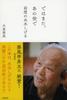
Why did Shimonaka Yasaburo, an ardent ultranationalist before and during the war,
maintain a stance of absolute peace after the war?
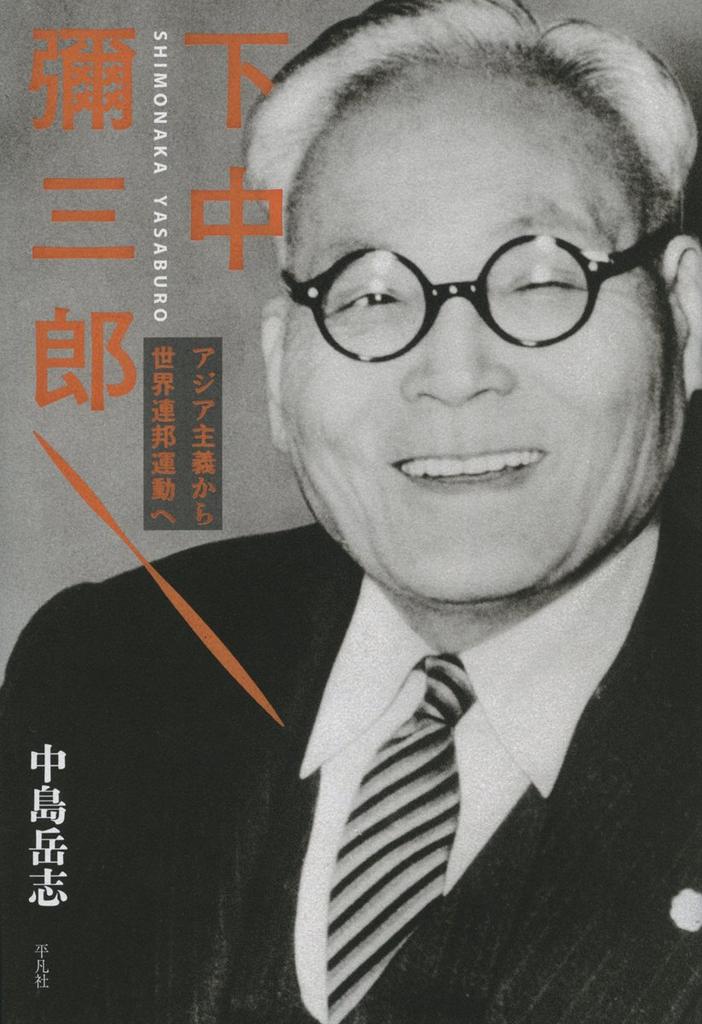
This book delves into the life of Shimonaka, who was described as a "monster of unknown ethics"!
The founding of Heibonsha, the publication of Japan's first full-scale encyclopedia, the Taisho-era labor movement,
Keimei-kai, the free education movement at Ikebukuro Children's Village Elementary School, Pan-Asianism,
the World Federalism movement, absolute pacifism...
Shimonaka presided over numerous organizations and movements, running through Japan's modern and contemporary history at a dizzying pace.
He was sometimes mocked as a "floating log," swaying wildly between right and left,
and has been considered an opportunist with no ideological consistency.
However, it is precisely in Shimonaka's "consistency," which has never been discussed before,
that he harbors a danger that is relevant to modern Japan.
Through Shimonaka's life, this book depicts the horizon of "the pursuit of a utopian paradise" where ultranationalism and pacifism are continuously connected.
"What I want to portray is the consistency of Shimonaka, which many people have failed to grasp. Trying to frame him as right-wing or left-wing inevitably leaves him out of the picture. As a result, he is perceived as a "theory-less" and "jumbled" person. The problem is not with Shimonaka, but with the framework for analyzing him.
Shimonaka published a vast number of essays and organized numerous organizations. Just grasping the big picture would require an enormous amount of work. However, there is value in shedding light on Shimonaka's life, even if it means accepting the difficulties and effort. The purpose of this book is to extract universal issues from his life. I do not intend to write a biography or success story of the founder of Heibonsha. (Omitted)
For me, this book is the trajectory of my struggle with Shimonaka Yasaburo. Overcoming Shimonaka's precariousness is directly connected to my ideological agenda." (Omitted) This work is essential for us who live in unstable and uncertain times. (From the "Introduction")


 Επιστροφή χρημάτων λόγω μη παράδοσης