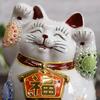
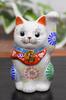
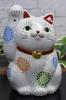
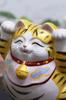
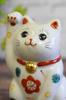
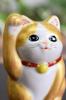
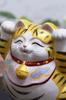
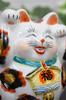
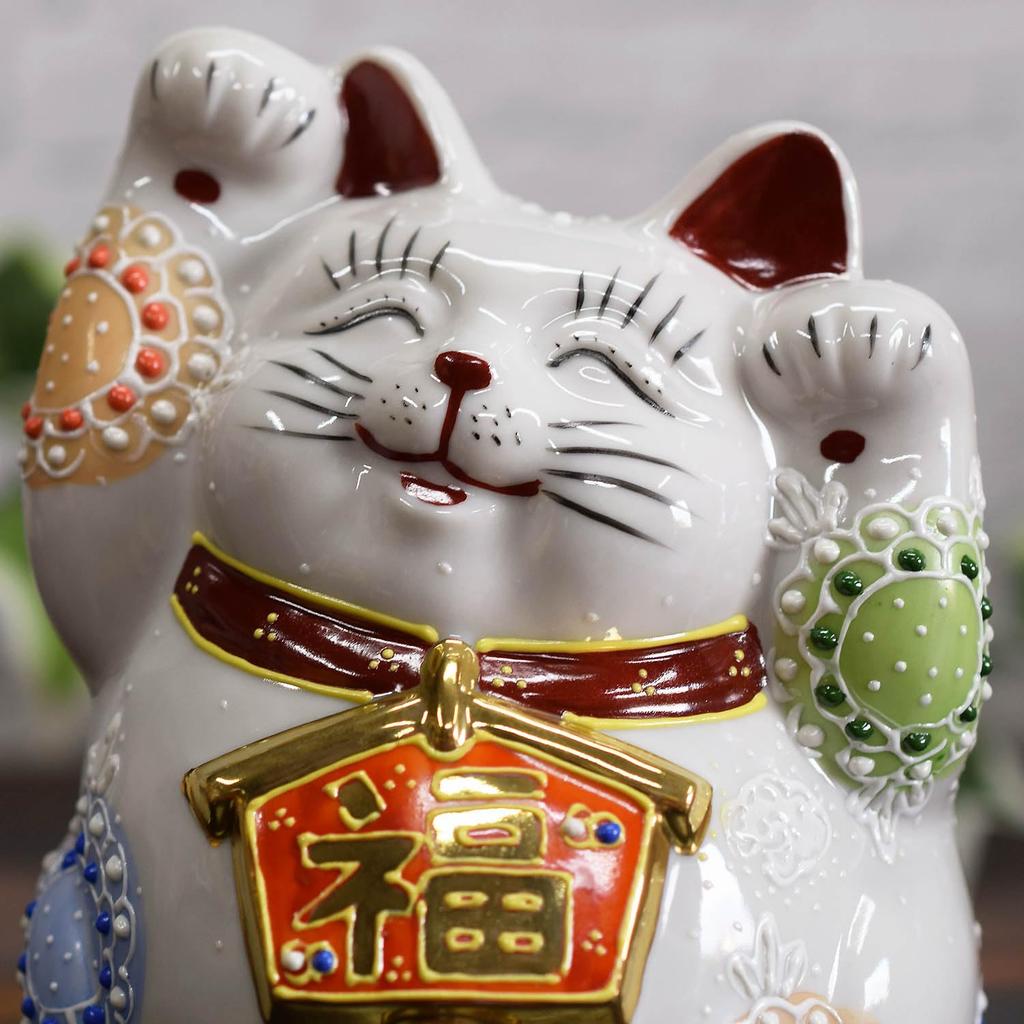
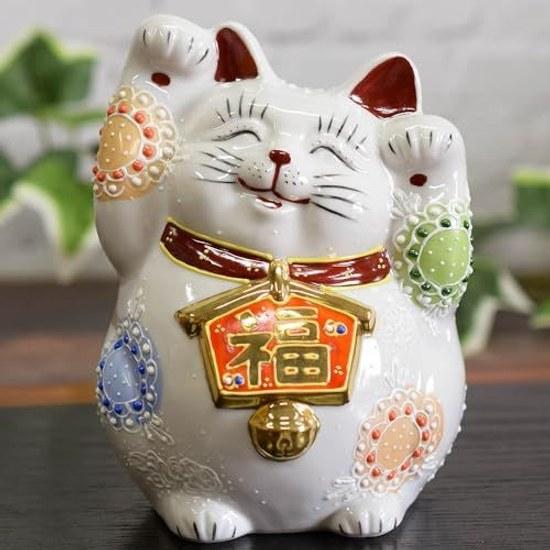
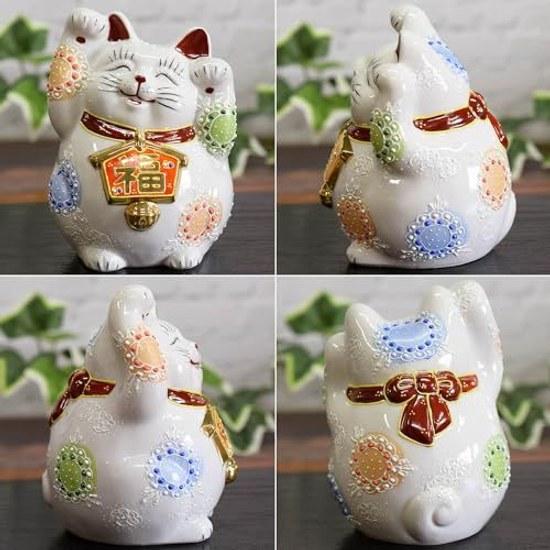
Product Description: The Maneki Neko has meaning! Right paw Maneki Neko invites wealth【Wealth and Happiness】. Left paw Maneki Neko invites customers (connections)【Many Visitors】. Colors also have meaning! White - invites good fortune, black - dispels misfortune, red - promotes health, gold (yellow) - satisfies wealth, pink - fulfills love, blue - enhances work and academic success.
Care Instructions: Wipe lightly with a dry cloth. If the paint becomes dull after long display, gently wipe with a tightly wrung cloth + dry wipe to restore shine. Particularly, the "gold" of Kutani can become cloudy over time, so occasional wiping will improve its condition.
Is it better to give a right paw or left paw as a gift? For personal gifts, the right paw is preferred, while larger left paw cases are often given to corporations.
Where is the place to display a Maneki Neko? It is placed in areas where people gather, such as the living room, entrance, or office desk. Occasionally changing its direction can improve its mood.
About the length of the paws: It is said that a long paw invites distant fortune, while a short paw invites nearby fortune.
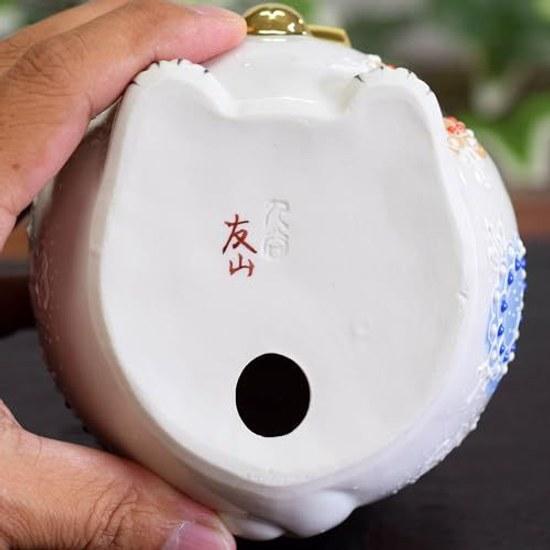
Is it made in Japan? It is 100% made in Japan. In Nomi City, Ishikawa Prefecture, artisans carefully finish each piece.
Popular Unique Maneki Neko: Dancing Maneki Neko, Upside-down Maneki Neko, Strong Arm Maneki Neko.
Sizes: Width 6cm x Height 10cm, Width 5.2cm x Height 9.5cm, Width 10cm x Height 13.5cm.
Benefits: Invites fortune that makes you want to dance! Overcomes difficulties! Invites fortune boldly!
Brand Introduction: The 370-year tradition of Kaga Hyakumangoku. Kutani ware is highly regarded worldwide as one of Japan's three major colored porcelain and a representative traditional craft of Japan, "Japan Kutani."
History of Kutani: The history of Kutani dates back to around 1
655. The lord of the Kaga Daishoji domain, Maeda Toshiharu, noticed the discovery of ceramic stone at a gold mine. He ordered the renowned alchemist Goto Saijiro to learn pottery in Hizen and built a kiln in Kutani. However, in the early 1700s, it suddenly ceased operation, and the pieces made during this time




 Επιστροφή χρημάτων λόγω μη παράδοσης