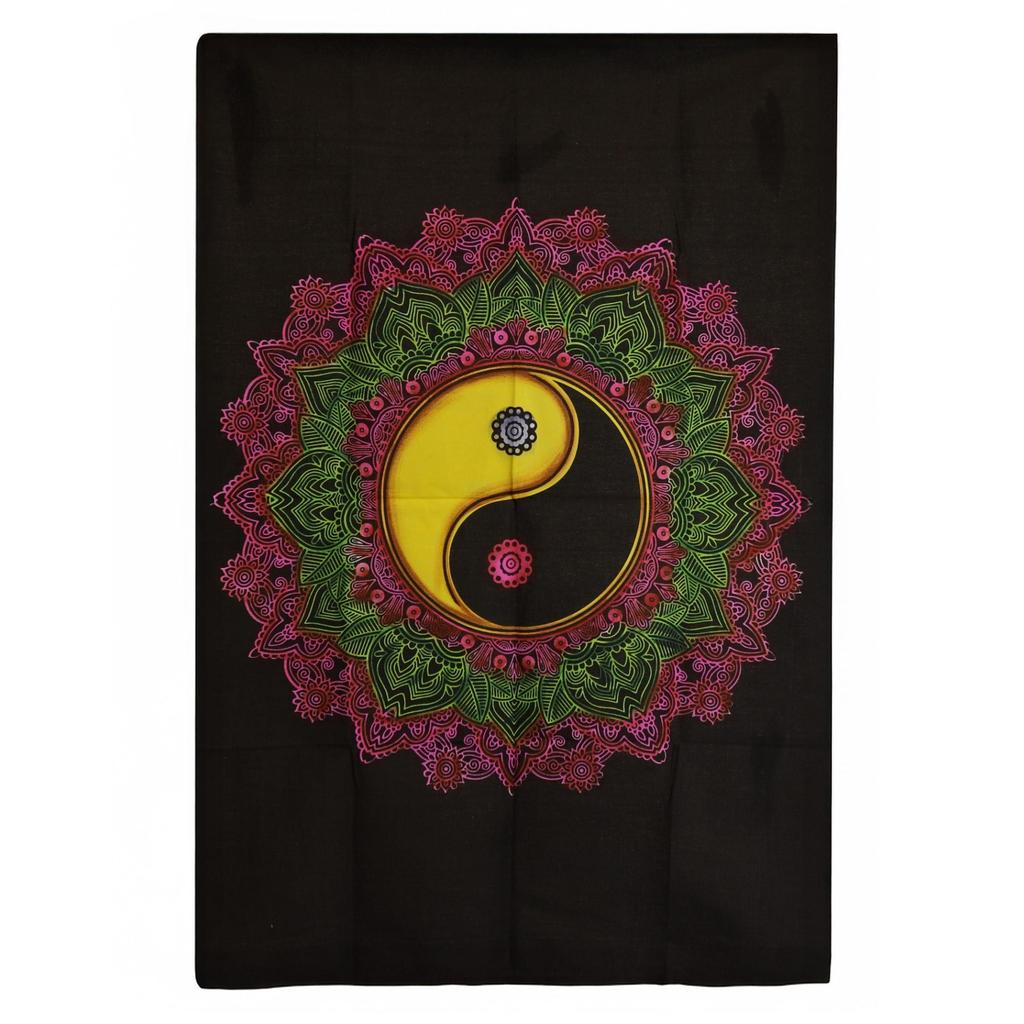
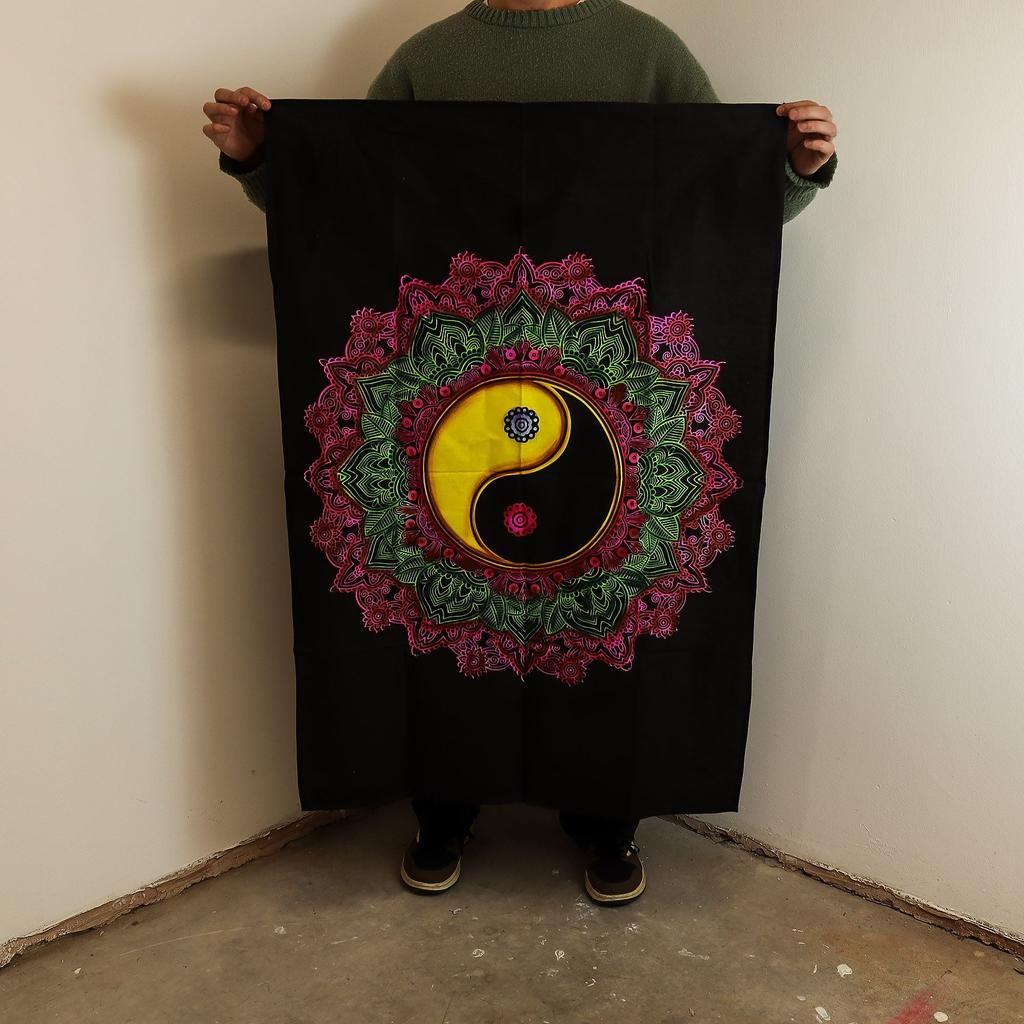
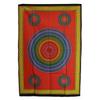
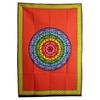
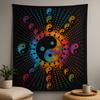
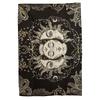
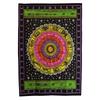
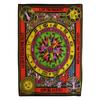
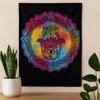
A screen-printed cotton wall hanging combining a yin yang symbol with a mandala pattern, printed in pink and green against a black background. This is the most colourful design in the cotton wall art range — where the Chakra, Sun Goddess, and Om hangings work in black, white, and gold, this one introduces vivid colour. The mandala radiates outward from the central yin yang motif, filling the 70 × 110cm surface with layered geometric and organic patterning. Made in India, 95 grams.
What Sets This One Apart
The pink and green palette is a significant departure from the rest of the range. Against the black ground, these colours read as saturated and vibrant — the kind of visual intensity that either pulls you in or isn't for you. If the gold-and-black hangings feel too sombre or restrained for your space, this is the alternative. It brings a different energy to a wall entirely through colour.
The mandala structure means the design radiates outward from a central point, which creates a natural focal effect. Your eye goes to the yin yang at the centre first, then follows the patterning outward toward the edges. This circular composition within a rectangular hanging works visually — the mandala fills the space while the black corners frame it.
The yin yang symbol at the centre is one of the most universally recognised images in the world. Combined with the mandala, which has its own deep tradition in Hindu and Buddhist art, the design draws on two distinct visual vocabularies — one Chinese, one Indian. The result is syncretic: a design that doesn't sit neatly in any single tradition but borrows from both.
At 70 × 110cm with a black ground, the hanging works as an anchor piece in a room. The saturated colours make it more visually dominant than the gold-and-black designs — it will draw attention in a way that the more neutral hangings don't. Place it where you want the eye to go.
The 95-gram weight and soft cotton drape remain the same across the range. The fabric hangs with a gentle fall, moves in a breeze, and folds flat for storage. The pink and green inks sit on the surface in the same matte finish as the gold and white on the other designs.
Printed Cotton, Made in India
Lightweight cotton fabric, screen-printed on one side, hemmed edges. The pink and green inks are applied through a mesh stencil, producing flat colour areas with crisp detail. The colours are bold in person — screen printing onto cotton gives a slightly matte, absorbed quality to the ink rather than the glossy saturation you'd get on paper or synthetic fabric. The reverse shows a faded impression and is not meant for display. The cotton has a natural, uncoated texture.
Placing and Caring For It
No hanging hardware is included — use pins, tacks, adhesive hooks, or clips. The fabric is light enough for any of these methods.
The pink-and-green colourway has a different room personality than the gold-and-black designs. It suits bedrooms, creative spaces, student rooms, and anywhere the visual mood leans warm and vibrant rather than quiet and contemplative. It works against white, cream, or grey walls where the colours pop cleanly. Against darker walls, the black ground blends into the background and the mandala pattern appears to float — a different but equally effective look. It pairs well with colourful textiles, cushions, and rooms that already have pattern and colour rather than rooms built on neutral restraint.
Hand wash in cold water if needed. Do not machine wash — the printed surface will degrade. The pink and green inks are more susceptible to visible fading than the darker tones used in the gold-and-black designs, so keep the hanging out of sustained direct sunlight. Iron on the reverse at low heat to smooth post-delivery creases.
Two Symbols, One Design
This hanging combines two ideas from different traditions. The yin yang (taijitu) originates in Chinese philosophy, particularly Taoism. It represents complementary opposites — not opposing forces at war, but interdependent aspects of a whole. Light contains a seed of dark, dark contains a seed of light, and neither exists without the other. The concept applies to anything with two aspects: activity and rest, warmth and cold, expansion and contraction. In Taoist thinking, balance isn't a fixed point between extremes but a constant, fluid interplay between them.
The mandala has its origins in Hindu and Buddhist tradition. The word comes from Sanskrit and means "circle" — though mandalas are usually far more complex than a simple circle. They're structured as concentric layers radiating outward from a centre point, and they appear in religious art, architecture, and meditation practice. In Tibetan Buddhism, sand mandalas are built painstakingly over days and then deliberately destroyed as a meditation on impermanence. In Hindu temple archi