THE SEEDS ARE SHIPPED IN TRANSPARENT SACHETS, WITH A CARD INSIDE INDICATING THE VARIETY OF THE SEED
++++++++++++++++++++++++++++++++++++++++++++++++++++++++++++++++++++++++++++++++++++++++++++++++
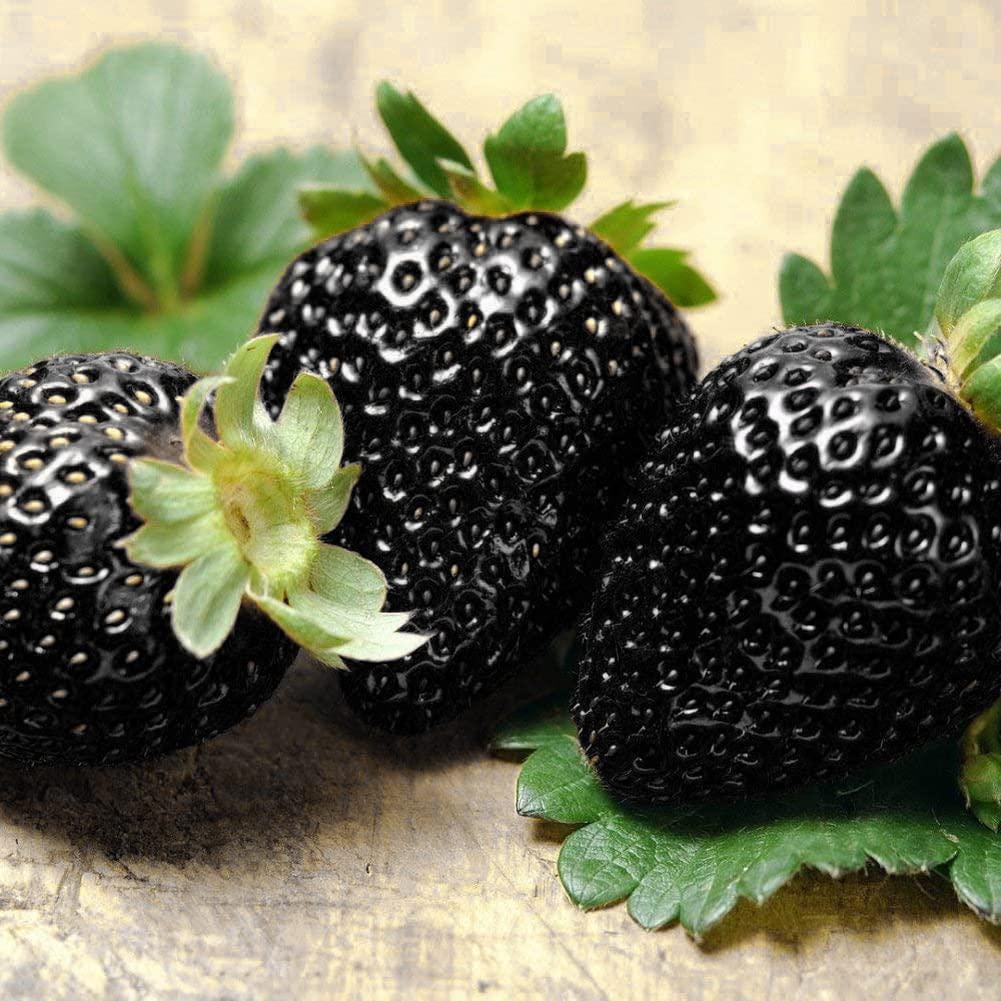
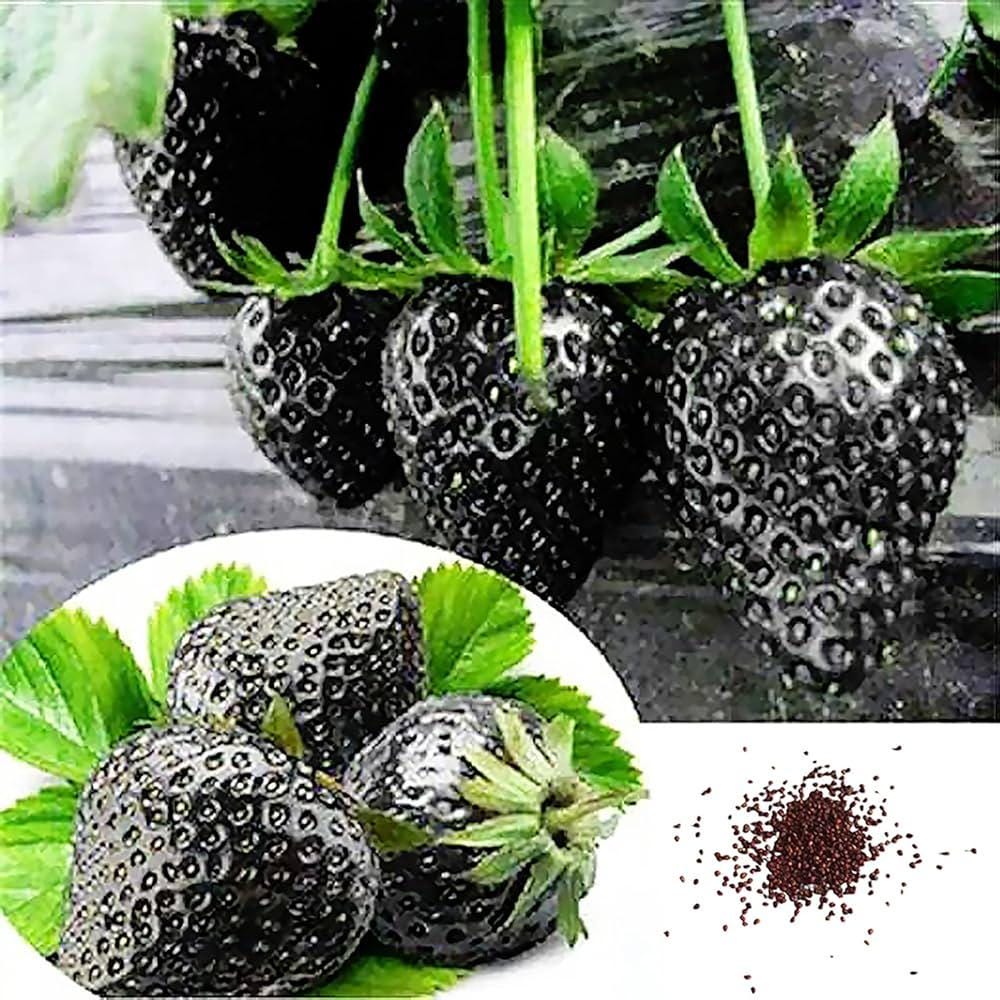
50 BLACK STRAWBERRY Seeds - "Fresh and Organic Seeds"
+++++++++++++++++++++++++++++++++++++++++++++++++++++ ++++++++++++++++++++++++++++++++++++++++
The strawberry is the false fruit of plants of the genus Fragaria, to which many different species belong.
This term commonly refers to the edible part of the plant.: Although strawberries are considered fruits from a nutritional point of view, they are not from a botanical point of view, as the actual fruits are the so-called achenes, or the yellow "seeds" that can be seen on the surface of the strawberry.. The strawberry is a false fruit or aggregate fruit because it comes from a flower that had multiple pistils, each of which, after fertilization, formed an achene.. The red part is nothing more than the enlarged receptacle.
The plant, outside the reproductive system, has non-sexual multiplication systems, such as the stolon, a lateral rooting branching by means of which it can produce new plantlets that are in fact clones of the same plant individual.. The strawberries commonly grown today are hybrids resulting from crossing European and American varieties.
History
The first garden strawberry was grown in Brittany, France, at the end of the 18th century.. The strawberry fruit was mentioned in ancient Roman literature in reference to its medicinal use.. The French began bringing strawberries from the forest to their gardens for harvest in the 14th century.. In the early 15th century, Western European monks used wild strawberries in their illuminated manuscripts.
The strawberry is found in Italian, Flemish and German art and in English miniatures.. The whole strawberry plant was used to treat depressive illnesses. In the 16th century references to strawberry cultivation became more common. Garden strawberries were first transplanted into forests and then propagated asexually by cutting the stolons.
The introduction of the F. virginiana is known from eastern North America to Europe in the 17th century. It is an important part of history because it is one of the two species that gave rise to the modern strawberry.
A French expedition went to Chile in 1712, where they introduced a strawberry plant with female flowers that gave rise to the common strawberry.. The Mapuche and Huilliche Indians of Chile cultivated the female strawberry species until 1551, when the Spanish arrived to conquer the territory.
French gardeners in Brest and Cherbourg around the middle of the 18th century first noticed that F. moschata and the F. virginiana were planted together with F. chiloensis, the Chilean strawberry that produced abundant and unusually large fruit.
Soon after, Antoine Nicolas Duchesne began studying strawberry breeding and made several discoveries crucial to the science of plant breeding, such as the reproduction of the strawberry which he published in 1766.
Production
In 2021, world strawberry production was 9.2 million tonnes, led by China with 37% of the total and the United States and Turkey as other significant producers. (table).
Due to the relatively fragile nature of strawberries, about 35% of the $2.2 billion U.S. crop spoiled in 2020.. This has led an Idaho company to plan to launch genetically modified strawberries in the near future, in an effort to make them more durable.. In the United States today, growers cost about $35,000 per acre to plant and $35,000 per acre to harvest strawberries, and more durable berries could reduce the spoilage rate.


 No-delivery refund